
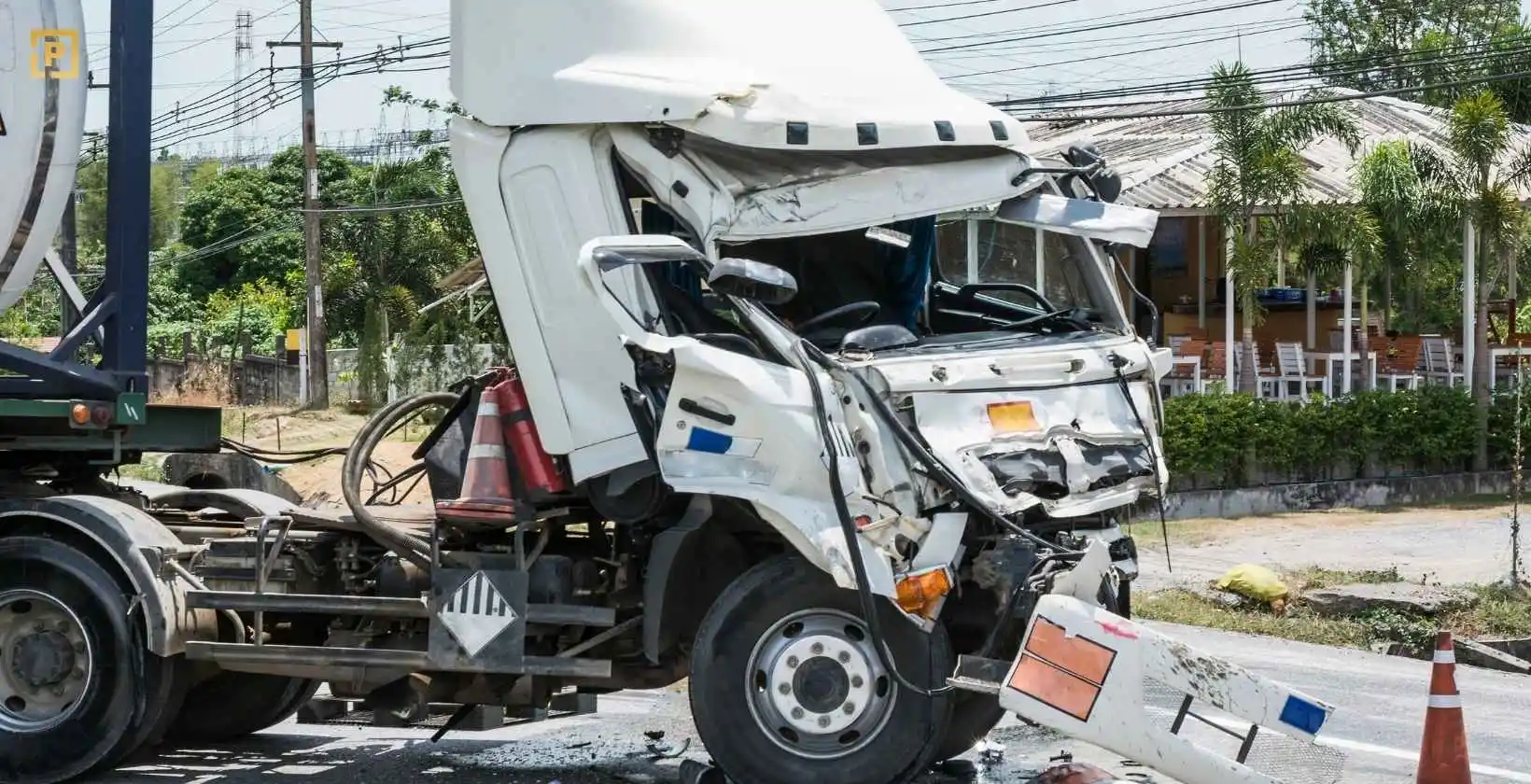
A Saturday morning commute on the 210 Freeway in Irwindale turned into one of the worst multi-vehicle wrecks the area has seen this year. On June 20, 2026, shortly before 9 a.m., a big rig traveling eastbound crossed through the center median just west of Irwindale Avenue and slammed into traffic on the westbound side, according to the California Highway Patrol and reporting from ABC7 Eyewitness News. The truck jackknifed across the freeway, leaving a 58-year-old woman dead at the scene and more than 30 other people hurt, including six children who were taken to the hospital.
If you or someone you love was caught in this crash, we are deeply sorry. What follows is a clear summary of what is known so far, along with straightforward information about your legal rights and the deadlines that matter in California. There is no pressure here, only answers.
What Happened on the 210 Freeway
Based on CHP incident reports and ABC7’s coverage, here is what has been confirmed:
- The crash was reported just before 9 a.m. on Saturday, June 20, 2026, on the 210 Freeway near Irwindale Avenue in Irwindale.
- A big rig traveling eastbound veered off the right shoulder, crossed the center divider, and struck vehicles on the westbound side before jackknifing across the lanes. Dashcam video shared with ABC7 captured the moments leading up to the collision.
- A 58-year-old woman was pronounced dead at the scene. Her name has not yet been publicly released.
- More than 30 people were injured. Ten were transported to hospitals, two of them with critical injuries. Six of those hospitalized were children. Another 22 people suffered minor injuries and declined to be taken to a medical center.
- At least three vehicles were involved, though CHP noted the exact number was still being confirmed.
- All westbound lanes and several eastbound lanes were closed for hours. The freeway fully reopened just after 3 p.m. Saturday.
- The cause of the crash remains under investigation by the California Highway Patrol.
We will update this page as more information becomes available and as the woman who lost her life is identified by authorities.
To the Family Who Lost a Loved One
There are no words that make this easier. A routine drive ended in a loss your family never saw coming, and right now the legal questions are probably the last thing on your mind. They should be. Your focus belongs with each other.
When you are ready, and only then, it can help to understand your options. Under California law, the surviving spouse, domestic partner, children, and certain other family members may be able to bring a wrongful death claim. That process exists to hold the responsible parties accountable and to recover support for funeral and burial costs, the loss of your loved one’s income and companionship, and the future your family was supposed to have. You do not have to figure any of this out alone, and you do not have to decide anything today.
To Those Who Were Injured
A crash like this leaves more than broken bones. Some of the people hurt that morning were children. Some walked away sore and shaken and only later realized how serious their injuries were. Whiplash, concussions, internal injuries, and back and neck trauma often surface in the days and weeks after a wreck, not in the first hour.
If you were in one of the vehicles, get medical attention even if you declined it at the scene, and keep every record. Those records protect your health first and your claim second. You may be entitled to recover the cost of your medical care, your lost wages, and the physical and emotional toll this has taken, whether you were a driver, a passenger, or a parent of an injured child.
Why Commercial Truck Crashes Are Different
A fully loaded big rig can weigh 20 to 30 times more than a passenger car. When one crosses a median, the consequences are catastrophic, and the cases that follow are far more complex than a typical fender bender. That complexity is exactly why families need experienced help.
In a crash involving a commercial truck, more than one party may be responsible. Liability can extend beyond the driver to the trucking company, the company that owned or leased the trailer, a maintenance contractor, or a cargo loader, depending on what the investigation reveals. Critical evidence also disappears fast. The truck’s electronic control module, often called the black box, along with the driver’s hours-of-service logs, electronic logging device data, maintenance records, and dashcam footage can all establish what went wrong, but trucking companies and their insurers move quickly to control that evidence. A formal legal hold sent early can be the difference between a strong case and a guessing game.
This is not a reason to panic. It is a reason to make sure someone is protecting your interests while the trucking company’s lawyers are already protecting theirs.
California Statute of Limitations: The Deadlines That Matter
Important: The deadlines below reflect general California law. The exact deadline in any specific case depends on facts that are still under investigation, including who is found responsible. Talk to a licensed California attorney about your situation before relying on any date. This is information, not legal advice.
- Personal injury claims: California Code of Civil Procedure section 335.1 generally gives an injured person two years from the date of the injury to file a lawsuit.
- Wrongful death claims: Under the same statute, surviving family members generally have two years from the date of death to bring a wrongful death claim.
- Injured children: When the injured person is a minor, California Code of Civil Procedure section 352 generally pauses, or “tolls,” the two-year clock until the child turns 18. There are important exceptions, so this should be confirmed with an attorney.
- A shorter deadline you cannot miss: If a government entity could share responsibility, for example, through the design or maintenance of the freeway median, California’s Government Claims Act (Government Code section 911.2) generally requires a formal claim to be filed within just six months. Because this crash involved a vehicle crossing the center median, this shorter deadline is worth evaluating early. Missing it can permanently bar an otherwise valid claim.
Two years can feel like plenty of time. In practice, the evidence that wins these cases is most accessible in the first weeks. The sooner the facts are preserved, the stronger your position.
How Pérez Law, PC Helps Families After a Catastrophic Crash
Pérez Law, PC is a California personal injury and trial firm based in Ontario, with a second office in Pomona, serving families across the Inland Empire and the greater Los Angeles area. Founded by Ricardo Antonio Pérez, the firm has spent decades recovering tens of millions of dollars for injured people and grieving families, and the majority of our clients come to us through word of mouth.
When you call, here is what to expect. We listen first. We explain your options in plain language. We handle the investigation, the insurance companies, and the trucking company’s lawyers so your family can focus on healing. And you pay nothing unless we win or settle your case, because we work on a contingency fee.
If you or someone you love was injured in the June 20 crash on the 210 Freeway, or if you lost a family member, we are here to answer your questions whenever you are ready.
Call Pérez Law, PC 24/7 for a free, no-obligation consultation:
- Toll Free: (877) 622-5888
- Email: contactus@perezlawcorp.com
Both of our offices are open 24 hours. The Pomona office is the closest to the crash site:
- Pomona Office (nearest to Irwindale) 522 West Holt Avenue, Pomona, CA 91768 Local: (909) 622-1071
- Ontario Office 822 North Euclid Avenue, Ontario, CA 91762 Local: (909) 983-2235
There is no fee to talk, and no obligation. Whether you decide to work with us or not, you deserve to understand your rights.
This article is based on reporting by ABC7 Los Angeles (KABC) and information released by the California Highway Patrol as of June 21, 2026. Details may change as the investigation continues. Pérez Law, PC does not represent any party in this matter at the time of publication. This content is provided for general informational purposes only and is not legal advice. Reading it does not create an attorney-client relationship. For advice about your specific situation, please consult a licensed California attorney.